The Year-End Advantage: Five Record-Keeping Habits That Pay Dividends (and Three That Don't)
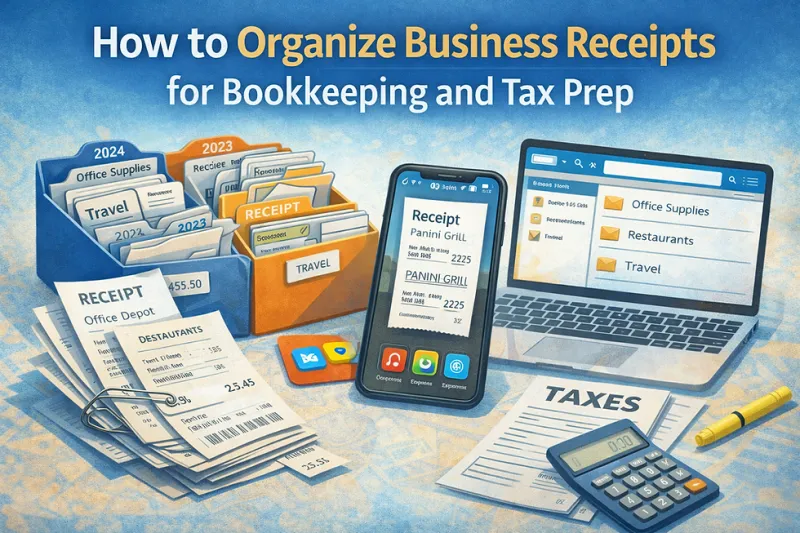
Photo: organised receipts bookkeeping small business desk, via static.wixstatic.com
Every January, accountants up and down the country meet clients clutching carrier bags of receipts and a phone full of unopened bank statements. The Self Assessment deadline still gets met, but the process costs more in professional fees, takes longer, and — critically — often produces a lower tax saving than it should, because deductions have been forgotten or records lost.
The remedy is not more bookkeeping. It is better bookkeeping: a handful of small habits, performed consistently, that make the year-end almost boring. Here are five worth adopting, and three worth abandoning.
Five Habits That Work
1. Photograph receipts the moment you receive them
Paper receipts fade — thermal ink can become illegible within a year — and HMRC requires you to keep records for at least five years after the 31 January submission deadline. A quick photo, filed into a folder or an app such as Dext, AutoEntry or even a well-named Dropbox directory, preserves the evidence permanently. The habit matters more than the tool: capture it at the till or not at all.
2. Reconcile monthly, not annually
Reconciling your bank and credit card statements against your bookkeeping software once a month takes twenty minutes. Doing the same exercise annually takes days and almost always surfaces transactions you cannot identify. Monthly reconciliation also means you spot duplicate charges, failed direct debits and forgotten subscriptions while there is still time to do something about them.
3. Keep business and personal money apart
For sole traders this is not a legal requirement, but it is the single highest-value habit on this list. A separate business current account — many are free or low-cost for basic use — makes every other habit easier. You will never wonder whether a card payment was a business expense or a personal one, and your accountant will spend less time (and charge you less) untangling the two.
4. Record the 'why' alongside the 'what'
A £240 hotel invoice tells you what you spent. It does not tell HMRC why. A note — 'overnight stay, Manchester, trade exhibition 14 March' — turns a receipt into evidence of an allowable expense. The same applies to mileage logs, home office use and mixed-purpose purchases. Two seconds of annotation now prevents a disallowed deduction later.
5. Diary the key dates, not just 31 January
The Self Assessment deadline dominates attention, but other dates affect your cash flow and your standing with HMRC:
- Payments on account fall due on 31 January and 31 July for many self-employed taxpayers.
- 5 April marks the end of the tax year — the natural point to run your final reconciliation and chase outstanding invoices.
- Late filing penalties start at £100 even if no tax is owed.
Knowing what is coming lets you plan for it rather than react to it.
Three Habits That Cost You
1. The shoebox system disguised as 'I'll sort it all in January'
Deferring everything to a single annual session feels efficient — one big push, job done. In practice, it produces the worst of both worlds: twelve months of forgotten context compressed into a stressful fortnight, with a professional fee inflated by the untangling required. Little and often beats a heroic annual sprint.
2. Over-engineering your spreadsheets
Some business owners build elaborate multi-tab workbooks with formulas, pivot tables and conditional formatting. Impressive, certainly — but if the spreadsheet takes an hour a week to maintain and cannot talk to your bank statement, it is costing more than it saves. Modern cloud bookkeeping tools (FreeAgent, Xero, QuickBooks) import bank feeds automatically and are free or cheap at the entry level. Use them.
3. Recording expenses you cannot substantiate 'to be safe'
Rounding up, claiming the occasional personal purchase, or estimating fuel costs because the paperwork went missing — these habits feel harmless and occasionally feel productive. They are not. If HMRC opens an enquiry, unsubstantiated claims are disallowed, penalties can follow, and the credibility of your entire return is called into question. Claim what you can evidence; leave the rest.
A Monthly Routine You Can Actually Keep
Fifteen minutes, once a month:
- Download or photograph any outstanding receipts.
- Reconcile your business bank account against your records.
- Annotate any ambiguous transactions with a note of the business purpose.
- Check your outstanding invoices and chase anything overdue.
- Glance at the tax calendar and note anything due in the next quarter.
That is the whole system. No spreadsheets at midnight, no January panic, no forgotten deductions.
If your records have drifted — or you would simply like a second pair of eyes before filing — Pomfrey Accountants works with sole traders and small businesses year-round, not just at deadline time. Clear records, dependable advice, and no surprises in January.