Receipts Worth Keeping: Ten Allowable Expenses That Quietly Slip Through the Net

Photo: pile of receipts and invoices on wooden desk small business, via thumbs.dreamstime.com
There is a particular kind of tax overpayment that never makes the news. It involves no penalties, no enquiries, no drama — just a perfectly allowable expense, quietly absorbed into the business's taxable profit because the owner assumed it 'wouldn't count'. In our experience, the pattern is remarkably consistent. The same handful of claims go missing, year after year.
Here are the ten we encounter most often.
1. Working From Home
If you run your business from a home office, you can claim a proportion of household costs — heating, lighting, broadband. HMRC offers a simplified route: £6 per week with no evidence needed. Where actual costs are higher, you can instead claim the relevant share of bills based on rooms used and hours worked. Many home-based owners claim nothing at all, presumably because it feels too small to bother with. Over a five-year Self Assessment record, £6 a week is over £1,500 of deductions.
2. Bank Charges and Card Fees
Interest on business borrowing, monthly account fees, and the percentage taken by card processors are all allowable. Because they appear as small, irregular amounts, they are among the most frequently overlooked entries in the books.
3. Professional Subscriptions
Body membership fees — from professional institutes to trade associations — are claimable where the body is relevant to your work. HMRC maintains a list of approved bodies, but the general principle is straightforward: if the subscription exists to keep you competent or connected in your trade, it likely qualifies.
4. Pre-Trading Costs
Expenses incurred before you formally started trading — market research, equipment, an initial stock purchase — can generally be claimed against early profits, in many cases as if incurred on your first day of business. New traders frequently assume the opposite.
5. Business Insurance
Public liability, professional indemnity, van insurance for business use — all allowable, yet often absent from the books of sole traders who pay premiums personally and never mention them at year-end.
6. Travel Between Workplaces
Mileage between two places of work, client visits, and trips to suppliers are claimable at 45p per mile for the first 10,000 miles. What trips people up is the distinction between ordinary commuting (not claimable) and genuine business journeys (claimable). A home-based trader travelling to a client is almost always on a claimable journey.
7. Repairs Versus Improvements
Repairing an existing asset — mending the office boiler, repainting the studio — is fully deductible. Replacing it with something better may count as capital expenditure instead. The distinction matters, and it is worth recording which is which at the time rather than reconstructing it later.
8. Uniform and Protective Clothing
A branded polo shirt, safety boots, overalls — claimable. Your ordinary wardrobe, however smart, is not. The key test is whether the clothing is recognisably work-specific.
9. Software and Subscriptions
Accounting software, cloud storage, design tools, domain renewals. If you pay monthly by card, these can scatter across a year's statements and vanish from view. An annual sweep of your bank and card statements usually recovers several forgotten subscriptions.
10. Training That Maintains Existing Skills
Refresher courses and training that updates skills you already use in your business are allowable. Training that gives you a new trade or skill generally is not — but the boundary is wider than many people assume.
The Habit That Holds It All Together
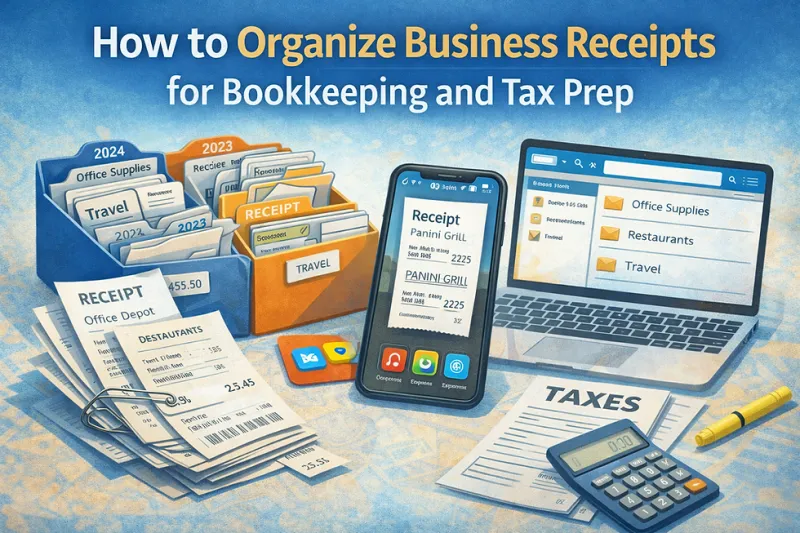
None of the above requires creativity — only record-keeping. The single most effective practice is unglamorous: keep every receipt, photograph them if that is easier, and note the business purpose at the time. Under Making Tax Digital, digital records are becoming the norm rather than the exception, and a tidy trail serves you just as well if HMRC ever asks questions as it does when you are completing your return.
One further reassurance: claiming an expense you genuinely believe is allowable is not aggressive tax planning. The rules exist to be used. If you are unsure whether a particular cost qualifies, the sensible step is to ask before writing it off — not to pay tax on it by default.
If you suspect your last Self Assessment return left money on the table, it may be worth a conversation. Unclaimed expenses are, in a quiet way, the most expensive kind.